
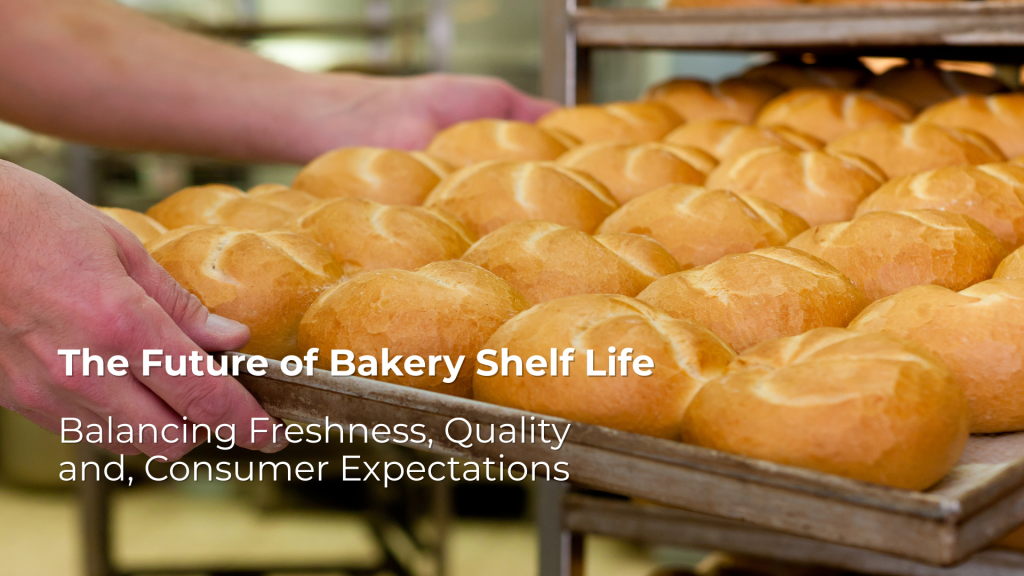
For bakery manufacturers, extending product shelf life is an ongoing challenge. Bread, buns, and other baked goods must stay fresh throughout distribution while maintaining their taste, texture, and overall quality. At the same time, consumers are increasingly looking for products with simpler ingredient lists.
This growing demand has made natural shelf-life extenders an important consideration in modern bakery formulations. As manufacturers explore alternatives to conventional preservatives, such as calcium propionate and potassium sorbate, the focus is shifting beyond simply replacing existing ingredients. Instead, manufacturers need to understand how different preservation systems perform in finished bakery products.
Natural shelf-life extenders, including fermentation-derived ingredients, can help inhibit mold growth and delay spoilage. However, their effectiveness depends on several factors, such as product pH, moisture levels, dosage, and the microorganisms present.
Research on clean-label bread preservation has shown that certain fermentates can delay visible mold growth. However, their performance may vary depending on the ingredient used and the overall formulation.
How Natural Shelf-Life Extenders Affect Bakery Quality
Preserving freshness is only one part of successful bakery formulation. Introducing a natural shelf-life extender may also require adjustments to the recipe and production process.
Some preservation systems can affect product acidity, flavor, dough fermentation, and loaf volume. These changes are particularly important in sweet bakery products, where even subtle flavor differences can influence consumer acceptance.
For this reason, an ingredient that works well in bread may not deliver the same results in cakes, muffins, or other bakery applications. Each product requires careful evaluation to ensure that shelf-life performance does not compromise its sensory quality.
Balancing Shelf Life, Product Quality, and Production Efficiency
From a commercial perspective, effective shelf-life optimization offers several benefits for bakery manufacturers. It can help reduce product waste, improve distribution flexibility, and maintain more consistent product quality.
However, achieving these benefits requires the right balance between preservation performance, sensory quality, and production efficiency.
Natural shelf-life extension should therefore be approached as a formulation strategy rather than a simple ingredient substitution. Other factors, including packaging, sanitation, processing conditions, and storage practices, remain essential to an effective preservation system.
Looking ahead, the future of bakery shelf life will depend on how effectively manufacturers integrate preservation technologies with evolving consumer expectations. The goal is not only to extend freshness but also to maintain the quality and characteristics consumers value.
At GLK, we believe that effective shelf-life solutions start with understanding each application. As a House of Specialty Ingredients & Solutions, we help food manufacturers explore natural ingredient solutions that support preservation performance, product quality, and the evolving needs of the bakery industry.