
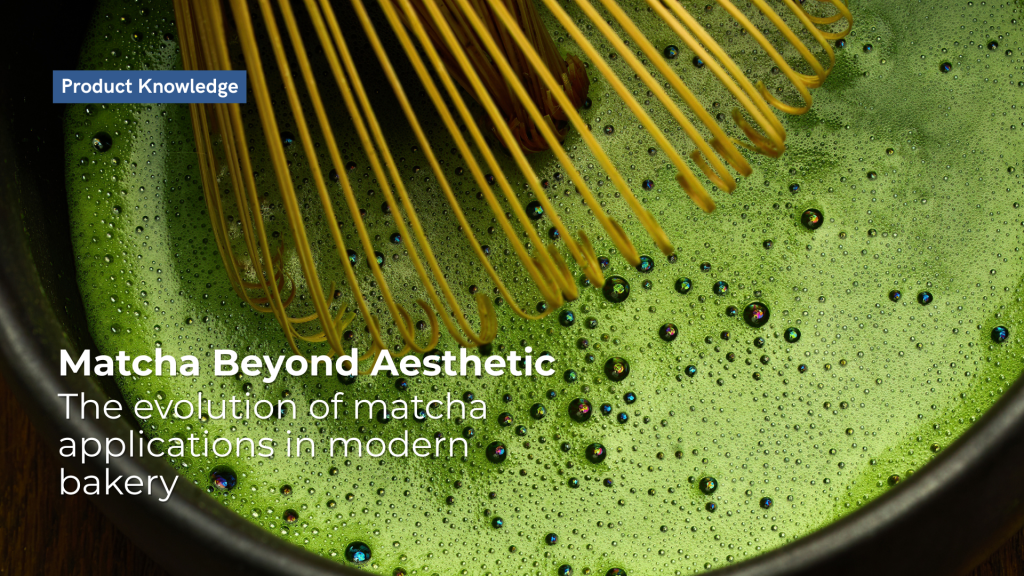
Matcha continues to grow beyond a visual trend and has evolved into one of the most versatile ingredients in modern food and beverage applications. As demand for premium matcha ingredients increases, businesses across the bakery, café, and food service industries are finding new ways to incorporate matcha into innovative products.
While consumers initially associated matcha with premium café beverages and social media trends, the market is now entering a more mature phase where functionality, flavor balance, and application performance become more important. Today, matcha for bakery applications is valued not only for its visual appeal but also for its unique flavor profile and versatility across different product categories.
In bakery applications, manufacturers and HORECA businesses are increasingly exploring matcha across categories such as cakes, cookies, cream fillings, dessert sauces, ice cream, and ready-to-drink beverages. However, not all matcha performs the same way in every application. Choosing the right matcha powder for baking is essential to achieving the desired product quality and consistency.
In reality, successful matcha applications depend on several technical factors, including heat stability, flavor retention, solubility, and color consistency during the baking process. On top of that, the quality of the matcha used plays a significant role in determining the final result. These factors are particularly important for businesses developing premium bakery products, desserts, and specialty beverages.
This creates challenges for manufacturers aiming to maintain premium product appearance and flavor consistency. Whether producing baked goods at scale or developing artisan café offerings, ensuring consistent matcha performance remains a key consideration for product development teams.
As consumers become more familiar with matcha, expectations are also increasing. They now expect balanced bitterness, authentic aroma, consistent color, and a premium texture experience. These evolving consumer preferences are driving the demand for high-quality matcha ingredients that can deliver reliable results across various food and beverage applications.
This is why it is important to understand the type and grade of matcha used to achieve the final goal of the product being produced. Different product goals require different grades and types of matcha. For example, a matcha intended for beverages may have different characteristics than a matcha formulated specifically for bakery, dessert, or culinary applications.
This trend opens opportunities for innovation across bakery and café categories. Moving into 2026–2027, matcha applications are expected to become more sophisticated and application-driven. Manufacturers, bakeries, cafés, and food brands that understand the technical aspects of matcha application in bakery products will be better positioned to create products that meet growing consumer expectations.
Explore our premium Maruyama Matcha and discover the right matcha solution for your bakery, café, and food manufacturing needs at galalaksanakreasi.com